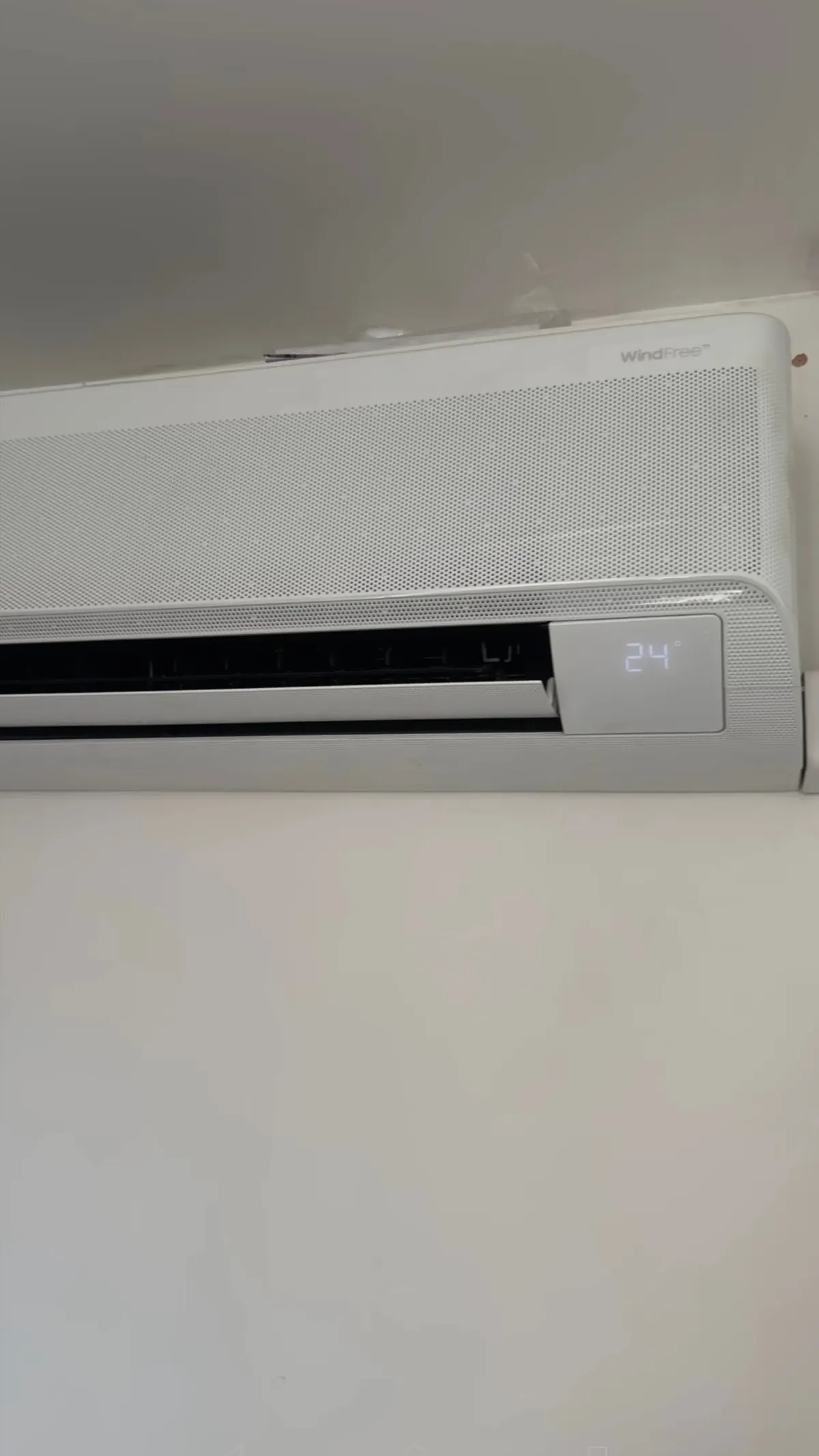
What air conditioning
costs to run
Pence per hour for a real London room, not a manufacturer's laboratory figure. Change the unit size and the electricity rate and the number changes with it.
- Bedroom, 2.5kW: about 12 to 22 pence an hour
- Living room, 5kW: about 25 to 45 pence an hour
- Cheaper again once the room is down to temperature
- It heats in winter at roughly 3 to 4 units of heat per unit of power
- Electro Heating LimitedCompany 12609754, registered in England and Wales
- NICEIC and Gas Safe registeredHeld by the parent company
- MCS certifiedFor heat pump and solar work
- 10+ years in LondonSame engineers, same company
Running cost calculator
Put in your own electricity rate. The default is a typical 2026 UK unit rate, but yours is on your bill and it is the number that matters.
Air conditioning costs about 12 to 22 pence an hour to run for a bedroom and 25 to 45 pence an hour for a living room at a typical 2026 UK electricity rate.
That is the figure while it is actively pulling the temperature down. Once the room is at the setpoint, an inverter system drops to a fraction of full power, so a full evening usually costs less than the hourly figure multiplied by the hours.
Cost per hour by unit size
| Unit | Typical room | Power drawn while cooling | Cost per hour |
|---|---|---|---|
| 2.5kW | Single bedroom, home office | 0.45 to 0.85 kW | 12p to 22p |
| 3.5kW | Double bedroom | 0.65 to 1.15 kW | 17p to 30p |
| 5.0kW | Living room | 0.95 to 1.7 kW | 25p to 45p |
| 7.0kW | Open plan kitchen diner | 1.3 to 2.4 kW | 34p to 62p |
Range covers the difference between a unit working hard on a 32 degree afternoon and the same unit ticking over once the room is at temperature. A modern inverter system spends most of its time near the bottom of the range.
What it costs across a summer
The number that actually matters is not pence per hour, it is what appears on the bill in September. For a London bedroom used through the genuinely hot part of the year:
| Usage pattern | Hours per season | Cost at 26p per kWh |
|---|---|---|
| Only the worst nights, about 15 nights | 120 hours | £19 to £27 |
| Every warm night, June to August | 300 hours | £47 to £66 |
| Nights plus hot afternoons | 500 hours | £78 to £110 |
| Home office, all day through summer | 900 hours | £140 to £198 |
For most London households the honest answer is somewhere between 30 and 90 pounds a summer for one bedroom. That is the number to weigh against sleeping badly for six weeks.
The winter side, which people forget they bought
Every system we install is reversible, so it heats as well as cools. In heating mode it delivers roughly three to four units of heat for each unit of electricity, because it moves heat rather than generating it.
In practice that makes it the cheapest way to heat one room that most London homes have. Warming a home office for a few hours with a 2.5kW unit typically costs 8 to 18 pence an hour, against firing a gas boiler and heating the whole house to get one room warm. It is not a replacement for central heating, and if you want that, an air source heat pump is the machine for it.
Five things that actually cut the running cost
- Set 24 degrees, not 18. Every degree lower adds roughly 6 to 10 percent. Twenty four degrees in a 32 degree heatwave feels cold.
- Close the door and the curtains. Cooling a room with the door open means cooling the hall, the stairs and the landing.
- Use auto fan speed. Locking the fan on maximum stops the unit modulating and costs more for no extra comfort.
- Clean the filters. A blocked filter can cost 15 to 25 percent in efficiency, and it takes five minutes.
- Run it on solar or stored electricity. The cooling peak lands in the same hours a London roof generates most, which is the strongest pairing there is between solar and cooling.
Running cost questions
How much does air conditioning cost to run per hour in the UK?
A 2.5kW bedroom unit costs about 12 to 22 pence an hour at a typical 2026 electricity rate, and a 5kW living room unit about 25 to 45 pence an hour. Those are the figures while it is actively cooling.
Once the room reaches the set temperature an inverter unit throttles down to a fraction of full power, so the average across an evening is usually well under half the figure above.
Is it cheaper to leave air conditioning on all day or turn it on when you get home?
For a normal working day, turn it on when you get home, or about thirty minutes before with a schedule. Cooling an empty house for eight hours costs more than the extra energy needed to pull the temperature down once.
The exception is a very hot multi-day spell in a heavy masonry house. Once the brickwork is saturated with heat, letting it fully warm up and pulling it back down every evening can cost more than holding a modest setpoint through the day.
Does air conditioning use more electricity than a fan?
Yes, considerably. A pedestal fan uses about 50 watts and an air conditioning unit actively cooling uses 600 to 1,500 watts. But a fan does not lower the temperature, it only moves air across your skin, so on a 32 degree night it does very little.
The honest comparison is what each one achieves. A fan costs about 1 pence an hour and makes a hot room feel slightly less hot. Air conditioning costs 12 to 45 pence an hour and makes a hot room cool.
Is air conditioning cheaper than gas central heating in winter?
Sometimes, for a single room. An air conditioning unit running in heating mode delivers about three to four units of heat per unit of electricity, so heating one room with it typically costs less than firing a gas boiler and heating the whole house to warm that room.
For heating the entire house, gas is usually still cheaper per unit of heat at current prices, and a proper air-to-water heat pump is the machine designed for that job.
What setting is cheapest?
Set the temperature to 24 degrees rather than 18, use auto fan rather than the highest speed, and keep the doors and curtains of the room closed. Every degree lower typically adds around 6 to 10 percent to the running cost.
Do not use the unit as a dehumidifier by setting an unreachably low temperature. If humidity is the problem, dry mode does it at a fraction of the power.
Ask us before you buy, not after
Tell us the room and we will tell you what it will realistically cost you to run over a London summer, including whether a smaller unit would do.